


Every parent knows that keeping a preschooler entertained can feel like a full-time job. Enter preschool art activities—the magical solution that turns chaos into creativity. Imagine a world where finger paint and glitter reign supreme, and every mess is a masterpiece waiting to happen. These activities don’t just keep little hands busy; they spark imagination and build essential skills for future success.
From squishy dough sculptures to colorful collage creations, preschool art activities offer endless opportunities for fun and learning. Not only do they encourage self-expression, but they also foster fine motor skills and cognitive development. So grab those paintbrushes and let the artistic adventures begin! After all, who wouldn’t want to witness the next Picasso in action?
Overview of Preschool Art Activities
Preschool art activities offer a vital platform for children to explore creativity. Engaging in various projects like finger painting, collage-making, and clay modeling enhances their self-expression. Through these activities, kids develop fine motor skills, critical for tasks like writing and buttoning clothes. Art also stimulates cognitive development by introducing concepts such as color, shape, and texture.
Young children benefit from experiencing different materials. Using items like crayons, markers, and recycled paper fosters exploration and experimentation. Activities such as stamp-making or nature art encourage them to observe their surroundings, promoting an awareness of the world.
Collaboration plays a significant role in preschool art activities. Working in groups nurtures social skills, allowing children to share ideas and support one another. This collaboration often leads to discussions that boost vocabulary and communication abilities.
Emotional expression finds its outlet in these artistic endeavors. Children often convey feelings through their artwork, providing insights into their emotions and thoughts. This practice can be especially beneficial for children who may struggle with verbal communication.
Incorporating art into the daily routine enriches the educational experience. Integrating these activities into lessons on science, math, or literacy enhances understanding and retention. Parents can create an environment that values creativity by encouraging participation in art at home.
Benefits of Engaging in Art Activities
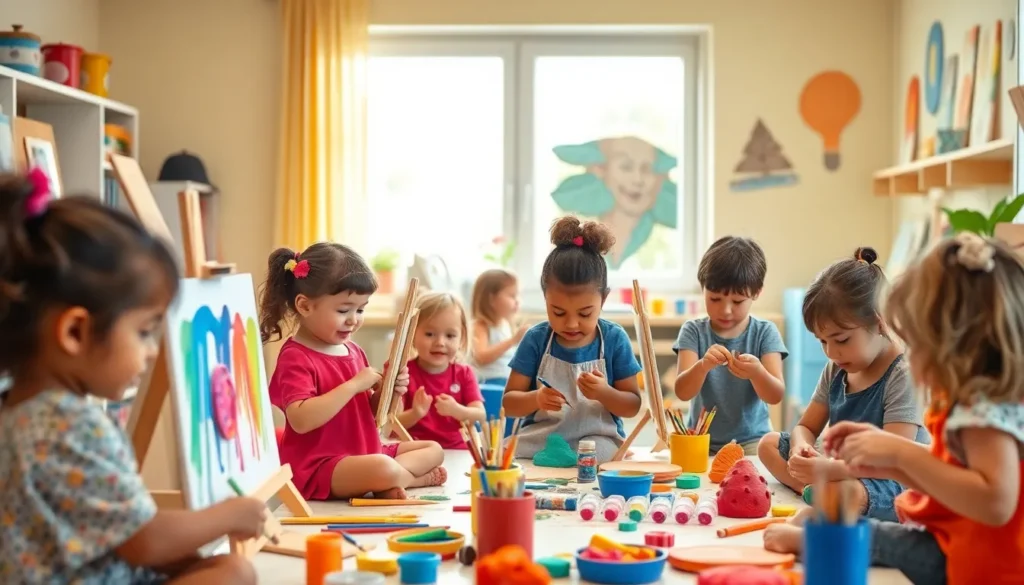
Engaging in art activities offers numerous benefits for preschoolers, positively impacting their development.
Cognitive Development
Art activities enhance cognitive development in young children. Through hands-on projects, they explore concepts such as color, shape, and texture. Engaging in creative tasks strengthens problem-solving skills. Children learn to think critically and make decisions as they choose materials and techniques. Collaboration during art sessions fosters social interaction and communication. When children discuss their artwork, they practice vocabulary and language skills. Engaging in diverse artistic mediums, like paint or clay, further stimulates cognitive growth. Overall, art activities serve as a tool for rich learning experiences.
Emotional Growth
Art activities significantly contribute to emotional growth in preschoolers. Creative expression allows children to communicate feelings and thoughts. Engaging in art can help children process emotions that they may struggle to verbalize. Each brushstroke or collage piece serves as an emotional outlet. Collaborative projects promote sharing and empathy, enhancing social skills. Building self-esteem through artistic accomplishments encourages a sense of pride. Art sessions also allow children to manage frustration and experience success. Overall, engaging in art nurtures emotional intelligence and resilience.
Popular Preschool Art Activities
Preschool art activities encompass a range of creative projects designed to engage young children. These activities foster creativity, develop fine motor skills, and encourage social interaction.
Painting Techniques for Young Children
Finger painting introduces tactile exploration, allowing kids to create vibrant artwork using their hands. Sponge painting offers a fun twist, enabling little ones to dab colors onto paper with sponges, promoting sensory experiences. Watercolor painting teaches children color blending and application techniques, creating beautiful, fluid effects. All these techniques provide opportunities for self-expression and enhance hand-eye coordination through active participation.
Crafting with Recyclables
Crafting with recyclables not only encourages creativity but also promotes environmental awareness. Children can transform cardboard boxes into imaginative structures, such as playhouses or vehicles, stimulating their imagination. Using plastic bottle caps for mosaic art allows kids to explore patterns while improving fine motor skills. Collecting and utilizing paper towel rolls for sculpture-building fosters innovative thinking and resourcefulness in young artists. Each project serves as a valuable lesson in both creativity and sustainability.
Tips for Effective Art Experiences
Creating art experiences requires attention to detail and a focus on maximizing children’s engagement and development.
Creating a Safe Art Environment
Maintain a safe, inviting space for art activities. Ensure children have access to non-toxic materials. Place protective coverings on surfaces to minimize mess. Use child-friendly tools like rounded scissors and washable paints to enhance safety. Facilitate careful supervision during projects to foster a sense of security. Organize supplies within easy reach to promote independence. Designate a cleanup area to teach responsibility. Every element in the environment contributes to a productive art experience.
Encouraging Creativity and Expression
Cultivate a mindset for creativity and self-expression. Introduce diverse art materials that inspire exploration. Allow open-ended projects, enabling children to use their imagination without constraints. Display children’s artwork prominently, reinforcing their sense of accomplishment and pride. Engage in discussions about their creations, asking open-ended questions that stimulate thought. Foster group collaboration when possible, promoting teamwork and sharing of ideas. Every encouragement contributes to a vibrant atmosphere for creative expression.
Incorporating Art into Daily Routines
Integrating art into daily routines enriches children’s experiences. Engaging in small art projects during morning time can kick-start their creativity. Using simple materials like crayons or paper encourages children to express ideas before starting structured activities. Incorporating art into meal times also promotes engagement; fruit and vegetables can become art supplies.
Including art in transitions throughout the day fosters creativity and keeps children involved. For example, during cleanup, children can sort materials by color or shape, turning a chore into a creative task. Storytime can transform into a craft session where children illustrate scenes from their favorite books.
Promoting art during outdoor activities offers additional opportunities for creativity. Children can collect leaves, sticks, and stones to create natural sculptures, encouraging exploration and creativity. Art can also enhance sensory play, mold dough or paint while discussing colors and textures.
Creating a designated art corner enhances children’s excitement about art. This space can include various supplies, like paint, brushes, and collage materials. With accessibility to materials, children feel empowered to initiate projects at will.
Incorporating conversations about their art further develops communication skills. Mistakes during the creative process become learning moments instead of setbacks. Offering praise for effort cultivates an environment where self-expression flourishes.
Establishing a routine that includes art fosters ongoing development in children. Regularly scheduled art activities enhance skills in areas like fine motor, cognitive, and social interaction. With consistent art exposure, children become more imaginative and confident in their abilities.
Embracing preschool art activities offers a wealth of benefits for young children. These creative experiences not only entertain but also lay the foundation for essential skills in self-expression and cognitive development. By incorporating diverse materials and techniques, children can explore their creativity while enhancing fine motor skills and social interactions.
Art serves as a powerful tool for emotional expression, allowing children to navigate their feelings in a constructive way. Establishing a routine that includes art fosters an environment where creativity flourishes, leading to confident and imaginative little ones. Encouraging these artistic adventures at home or in preschool can nurture the next generation of innovative thinkers and problem solvers.

