
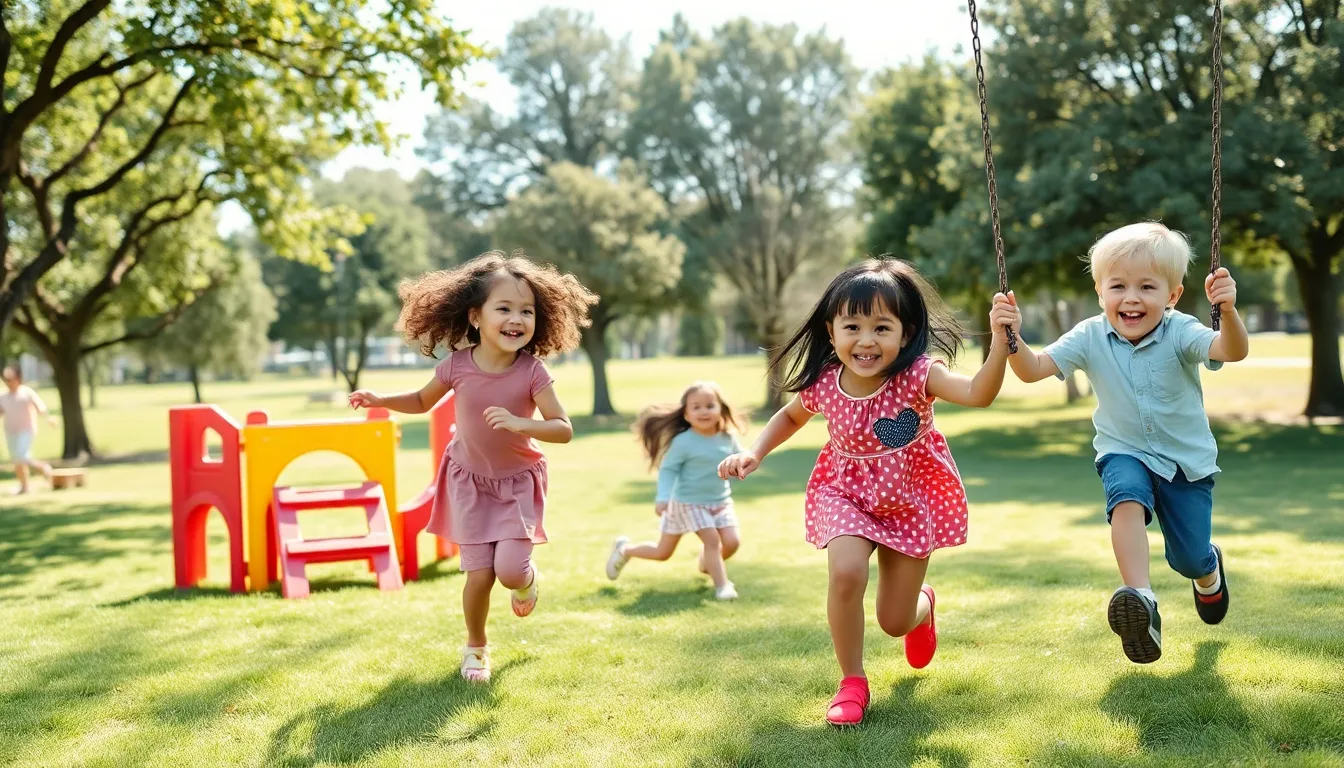

Every parent knows that a tired child is a happy child, and what better way to tire them out than with some fun gross motor activities? These activities not only keep little ones busy but also help develop their coordination, balance, and strength. Think of it as a workout for their tiny muscles—without the gym membership!
Importance Of Gross Motor Activities In Preschool
Engaging children in gross motor activities plays a vital role in their development. Participating in these activities fosters a sense of joy while allowing kids to refine their physical abilities.
Benefits For Physical Development
Physical development thrives through gross motor activities. Building coordination becomes evident as children navigate various movements. Balance strengthens when they walk, run, and jump. Engaging in active play enhances overall muscle strength. Daily practice leads to improved flexibility and stamina. Additionally, children experience a decrease in sedentary behaviors. Outdoor spaces and structured play contribute to a well-rounded physical foundation.
Benefits For Cognitive Development
Cognitive development flourishes alongside physical engagement. Problem-solving skills sharpen as kids face challenges during play. Memory improves when children remember sequences of movements in games. Following instructions in group activities enhances attention spans. Creativity often blossoms as kids invent new ways to play. Through gross motor activities, children also learn to cooperate with peers, developing social skills. These experiences intertwine physical and cognitive growth effectively.
Types Of Preschool Gross Motor Activities

Preschool gross motor activities fall into two main categories: outdoor activities and indoor activities. Both types provide essential benefits for young children.
Outdoor Activities
Outdoor activities promote active play and exploration. Running helps enhance speed and agility. Climbing structures develop strength and coordination. Jumping encourages the use of large muscles, making it an excellent way to improve overall muscle tone. Playing with balls, like kicking or throwing, refines hand-eye coordination and balance. Engaging in group games fosters teamwork and social skills. Nature walks offer opportunities to observe surroundings while encouraging movement and curiosity.
Indoor Activities
Indoor activities provide valuable motion while accommodating weather-related constraints. Obstacle courses using cushions and tunnels enhance coordination and problem-solving skills. Dancing promotes rhythm and body awareness, allowing for self-expression. Playing with large building blocks develops stability and fine motor skills. Interactive games that involve movement, such as scavenger hunts, maintain engagement and excitement. Creative activities like yoga incorporate stretching, balance, and relaxation, offering a comprehensive approach to physical development indoors.
Creative Ways To Incorporate Gross Motor Skills
Engaging preschoolers in gross motor activities can be enjoyable and creative. Various methods exist for incorporating movement into everyday routines and themes.
Using Everyday Objects
Common household items make excellent tools for gross motor play. Chairs can act as hurdles while pillows serve as stepping stones. An empty box transforms into a tunnel for crawling. Balls encourage kicking, throwing, and catching, enhancing coordination and strength. Incorporating these objects facilitates imaginative play while promoting physical activity. Parents and educators find that using familiar items simplifies the setup and encourages participation.
Themed Activity Days
Themed activity days add fun and excitement to gross motor skill development. Choosing a specific theme, like “ocean adventures,” can inspire activities that mimic swimming or jumping like dolphins. For example, during a “space day,” children can hop like astronauts or crawl through “asteroid fields.” Incorporating music related to the theme enhances enjoyment. Educators notice that themed days spark interest and engagement, making exercise feel less like a chore and more like an adventure. The structured activities facilitate both movement and creativity, contributing to effective physical development.
Safety Considerations For Gross Motor Activities
Ensuring safety during gross motor activities is essential. Attention to the environment and supervision significantly minimizes risks for preschoolers.
Environment Setup
Create a safe play area by removing hazards. Clear obstacles from floors, ensuring surfaces remain dry and stable. Soft surfaces like grass, mats, or foam padding reduce injuries during falls. Arrange equipment to provide ample space for movement, preventing overcrowding and collisions. Keep sharp objects and small items out of reach to avoid choking hazards. Establish safe boundaries so children know where to play and explore.
Supervision Tips
Effective supervision enhances safety during activities. Maintain an active presence, observing children’s movements and interactions closely. Assign adults to groups to ensure appropriate attention and guidance. Encourage children to communicate about any discomfort or equipment issues. Consider using designated observers for larger groups, ensuring all participants feel secure. Instill the importance of following rules to promote safety while engaging in activities.
Engaging preschoolers in gross motor activities is essential for their physical and cognitive development. These activities not only promote fitness but also cultivate important skills like coordination and teamwork. By incorporating both indoor and outdoor play, children can explore their environment while enhancing their strength and flexibility.
Creative approaches to gross motor activities can turn exercise into an enjoyable adventure. Themed days and imaginative play keep children excited about movement while fostering social interactions. Prioritizing safety in these activities ensures a secure environment where kids can thrive.
Ultimately, embracing gross motor activities lays a strong foundation for a child’s overall growth and well-being. By making movement a fun part of their daily routine, parents and educators can support a healthier and happier future for preschoolers.

